

Plug and Play Ethanol Kit: Best E85 Flex Fuel Systems for 2026
October 18, 2026

Table of Contents
- Why a Plug and Play Ethanol Kit Beats Custom Tuning
- Quick Comparison: Plug and Play Ethanol Kits by Price and Fitment
- E85 Flex Fuel Conversion Kit Options for LS and Late-Model GM
- Choosing an E85 Kit for Trucks, SUVs, and Engine Swaps
- Flex Fuel Kit Compatibility: Verify Before You Buy
- Flex Fuel Tuning Requirements and What Each Kit Handles
- Installation, Safety, and Total Cost of Ownership
- Conclusion
- Frequently Asked Questions
Last Updated: October 19, 2026
Why a Plug and Play Ethanol Kit Beats Custom Tuning
A plug and play ethanol kit is a self-contained flex fuel system that reads ethanol content at the fuel line and adjusts fuel delivery automatically, no laptop, no dyno session, no custom calibration.
Custom tuning works, but it locks you into one fuel. E85 varies by season and by station, which is exactly why the U.S. Department of Energy's ethanol blend guidance treats flex fuel capability as a fuel-content problem rather than a fixed-tune problem.
The trade-off is real: a plug and play kit costs money up front and delivers a defined power gain rather than a tuner's maximum. For a daily driver, that trade is usually worth it.
Key Takeaway
The core difference is adaptability. A custom tune is a snapshot of one fuel blend. A plug and play ethanol kit adjusts continuously, which matters because pump E85 is rarely the same twice.
Quick Comparison: Plug and Play Ethanol Kits by Price and Fitment
Pricing runs from entry-level sensor kits to full adaptive controllers; the right pick depends on whether your ECU already has flex fuel mapping.
| System | Price | Vehicle Coverage | Tuning Required | Best For |
|---|---|---|---|---|
| FlexLink (C7 Corvette, V6/V8 Camaro) | $399.00 | 2014-19 C7, 2012-15 V6 Camaro, 2016-23 V8 Camaro | ECU activation by a shop | Cars with factory flex fuel mapping |
| FlexLink Stand Alone ECU | $459.00 | Holley, AEM, Haltech, MegaSquirt and similar | Flex map loaded in ECU | Engine swaps on stand alone management |
| ProFlex Commander Gen1/Gen2 CTS-V | $749.00 | 2004-07 and 2008-14 CTS-V | None | LS CTS-V daily drivers |
| ProFlex Commander (Trailblazer SS, C5, LS Swap, Crate Swap) | $899.00 | 2006-09 Trailblazer SS, 1997-04 C5, LS swaps, Coyote/Hemi/LS crate swaps | None | Trucks, SUVs, and swaps |
Two families, two jobs. FlexLink supplies ethanol content data to an ECU that already knows what to do with it. ProFlex Commander adds the adaptive fuel management itself, which is why it costs more and requires no tuning at all.

Pro Tip
If you are unsure which family fits, check one thing first: does your factory ECU have a flex fuel table from the factory? If yes, FlexLink is the cheaper path. If no, you need a Commander.
E85 Flex Fuel Conversion Kit Options for LS and Late-Model GM
Late-model GM platforms are the sweet spot for E85: the fuel systems are already strong and the ECU architecture is well understood. That is why we split coverage into two families.
ProFlex Commander Systems: No Tuning Required
The ProFlex Commander is our flagship adaptive system. Its patented BlendSense technology refreshes fuel content readings every 30 milliseconds and adjusts delivery in real time, so the vehicle runs correctly on E85, E70, or 93 octane.
Installation runs about 45 minutes with common hand tools. Our ProFlex Commander for the 2006-09 Trailblazer SS at $899.00 is a good example: complete system, plug-and-play wiring harness, and a dyno-proven 7-10% gain in wheel horsepower and torque on E85. The same architecture covers the 1997-04 C5 Corvette at $899.00 (30-35 wheel horsepower gains) and the LS swap kit at $899.00 for 1997-2015 LSx builds.
For CTS-V owners, the Gen1 2004-07 system and Gen2 2008-14 system both list at $749.00.


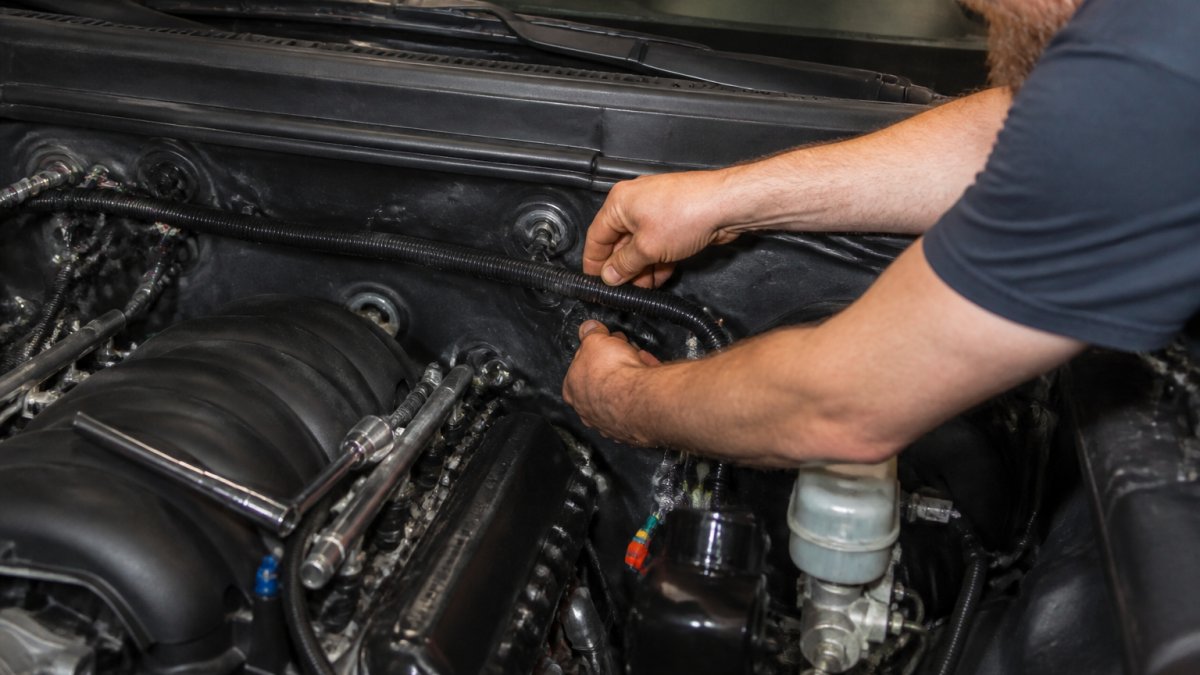
FlexLink Systems: For ECUs With Factory Flex Fuel Mapping
FlexLink is the leaner option: a genuine GM fuel content sensor, quick-connect OE quality fuel lines, and a plug-and-play harness that feeds content and fuel temperature data to an ECU with existing flex fuel logic.
The catch: a tuning shop must activate the flex fuel setting in the ECU, a simple on/off change, but a trip you have to plan for. Our C7 Corvette Stingray kit and 2016-23 V8 Camaro kit both list at $399.00.
Choosing an E85 Kit for Trucks, SUVs, and Engine Swaps
Trucks and SUVs change the calculation because weight and towing load amplify the benefit of ethanol's cooling effect and octane. The Trailblazer SS is the clearest case: a 6.0L LS2 in a heavy chassis, where the 7-10% gain shows up as mid-range pull rather than a peak dyno number.
Engine swaps are a different problem: a swapped car rarely has a native flex fuel path, so the crate engine swap Commander at $899.00 covers Coyote, VooDoo, Gen3 Hemi, and LS engines in non-native chassis with OE ECU and PCM compatibility. If your swap runs stand alone management, the FlexLink Stand Alone ECU kit at $459.00 formats sensor data for Holley, AEM, Haltech, MegaSquirt, and similar platforms.
One rule applies to every swap: confirm your injectors and fuel pump can flow full E85 before you install anything. A controller cannot fix a fuel system that runs out of capacity.
Watch Out
Installing a flex fuel system on a swap with undersized injectors or a tired pump causes lean conditions under load, and that is how engines fail. Verify fuel system capacity first, then buy the kit.
Flex Fuel Kit Compatibility: Verify Before You Buy
Most returns and failed installs trace back to a compatibility miss that ten minutes at the kitchen table could have caught. Here is the order of checks that catches expensive mismatches before you click buy.
Step 1: Decode the VIN, do not trust the model year
Model-year ranges on flex fuel kits are narrow, and a one-year mismatch is the most common ordering error, a 2008-14 CTS-V and a 2015-18 CTS-V take different systems. Pull the 17-digit VIN from the dash or door jamb and match the 10th character (model-year code) and 4th-8th characters (engine and platform code) against the fitment table. Do not assume a late-build 2014 is treated as a 2015.
Step 2: Identify your ECU architecture
This fork decides which kit family you need:
- Factory flex fuel table present (many late-model GM trucks, SUVs, and some passenger cars): a sensor-and-harness kit like FlexLink is the cheaper path, because the ECU already knows how to use ethanol content data.
- No factory flex fuel table (most performance cars, older platforms, and swaps): you need an adaptive controller like the ProFlex Commander that manages fuel delivery itself.
- Stand alone management (Holley, AEM, Haltech, MegaSquirt and similar): you need a kit that formats sensor data for your ECU, plus a flex map loaded by your tuner.
Step 3: Measure your fuel line and connector type
Flex fuel sensors splice into the fuel line, and diameter and connector style vary by platform. Before ordering, inspect the feed line at the firewall or near the tank and note:
- Line diameter, common sizes are 3/8 in and 5/16 in; a kit built for one will not seal on the other without adapters.
- Connector style, quick-connect fittings differ between model families, and OE-quality quick-connects are what keep the install leak-free.
- Line material, factory nylon or PTFE lines handle E85; older rubber lines may not, and that is a supporting upgrade, not a kit problem.
Step 4: Confirm fuel system capacity with math, not vibes
A controller cannot fix a fuel system that runs out of flow. Two numbers decide this:
- Injector duty cycle. If your current injectors are already near their limit on gasoline, E85's lower stoichiometric ratio (roughly 9.8:1 versus 14.7:1 for gasoline) means you need about 30% more fuel volume at the same power. Injectors that are maxed on gas will be past maxed on E85.
- Pump flow at pressure. A tired pump that feeds gasoline adequately may not hold pressure at the higher flow E85 demands, especially on forced induction.
Most practitioners use a 30% fuel-volume rule of thumb when sizing for E85. If your injectors or pump are marginal, budget for that upgrade before the kit, it is part of the real cost, not an add-on.
Step 5: Confirm tuning access before you order
For sensor-and-harness kits, a shop must switch on the ECU's flex fuel function, a simple on/off change, but it requires a tuner with the right software and, on some 2020-23 applications, an unlocked ECU. Call your tuner first and ask: can you activate flex fuel on my ECU, and is my ECU unlockable? A kit that arrives and cannot be activated is a paperweight.
ProFlex Commander for Trailblazer SS E85 Flex Fuel System →
Pro Tip
Write your VIN down and run all five checks against the product page's fitment table before ordering. The ten minutes you spend here is cheaper than return shipping and a wasted Saturday.
Flex Fuel Tuning Requirements and What Each Kit Handles
Flex fuel tuning requirements differ sharply between the two families, which is where most buyers get confused about what they are paying for.
The ProFlex Commander requires no tuning. Adaptive fuel management is built in, it works with stock or performance gas tunes, and it adapts instantly if you change the tune later.
FlexLink requires one ECU activation. The hardware handles sensing and data, but the ECU needs its flex fuel function switched on by a tuning shop.
Stand alone kits sit in between: your ECU needs a flex map loaded and a sensor input lead available, so confirm with your ECU manufacturer that both exist. For anyone weighing this against a full custom calibration, the EPA's flex fuel and alternative fuel overview is a useful primer on how ethanol content affects combustion and emissions.
Installation, Safety, and Total Cost of Ownership
Most listings show a kit price and stop. That number is not what you will spend. Here is the full picture: what installation involves, where the safety risks live, and the all-in cost once tuning, supporting upgrades, and fuel costs are counted.
What installation actually involves
Commander systems install in about 45 minutes with common hand tools and no shop time, in four steps:
- Mount the controller in the engine bay using the supplied bracket and existing factory mounting points.
- Connect the plug-and-play harness to the factory fuel system and the controller, no cutting or splicing on supported applications.
- Install the fuel content sensor in the feed line using the supplied quick-connect fittings.
- Power up and verify, the controller reads content and fuel temperature and begins adapting.
Sensor-and-harness kits like FlexLink add one shop visit for ECU activation. That is the only labor cost outside the kit price on supported applications.
Safety: where the real risks are
Fuel-system safety comes down to three failure modes, each with a specific mitigation:
- Lean conditions under load. When ethanol content rises, the engine needs more fuel volume. A fixed tune cannot add it; an adaptive controller can. BlendSense refreshes content readings every 30 milliseconds and adjusts injector management continuously, which is what prevents the lean condition that damages pistons and valves.
- Fuel leaks at connections. Quick-connect fittings must be fully seated and the line must be rated for E85. Nylon and PTFE lines handle ethanol; older rubber lines may not. Check every connection after the first fill and again after the first week.
- Sensor or wiring faults. A failed content sensor can default to a safe value or throw a code. The ProFlex Connect app runs automatic diagnostics so you can spot a sensor or wiring issue before it becomes a repair. If the controller loses signal, the safe behavior is to fall back to a conservative fuel assumption, confirm this behavior with the manufacturer before relying on it.
Cooler cylinder, oil, and coolant temperatures are a documented side benefit of running ethanol, but they are a benefit, not a safety feature. Do not confuse the two.
Emissions and warranty: what to know before you install
On emissions, E85 and flex fuel vehicles are treated differently from gasoline-only vehicles under federal rules, and some states have their own inspection requirements. The EPA's flex fuel and alternative fuel overview is a useful starting point on how ethanol content affects combustion and emissions.
On warranty, be direct with yourself: federal law limits how a manufacturer can void coverage, but any aftermarket fuel system carries some risk of a dealer dispute. The FTC's guidance on auto warranties explains your rights under the Magnuson-Moss Warranty Act.
Total cost of ownership: the full breakdown
Here is the all-in number for each path at current pricing:
| Cost item | Commander path | FlexLink path |
|---|---|---|
| Kit price | $749.00-$899.00 | $399.00-$459.00 |
| Installation labor | $0 (DIY, ~45 min) | One shop visit for ECU activation |
| Tuning | $0 (none required) | ECU activation only |
| Supporting upgrades (if needed) | Injectors/pump if marginal | Injectors/pump if marginal |
| Ongoing fuel cost | E85 typically priced below 93 octane at the pump | Same |
Two things move the total more than the kit price:
- Supporting fuel-system upgrades. If your injectors or pump are marginal on gasoline, E85's roughly 30% higher fuel volume demand will push them past their limit. Budget for injectors and a pump before the kit if that applies to you.
- Fuel cost over time. E85 is typically priced below premium gasoline at the pump, but it also delivers lower miles per gallon because of its lower energy density. The break-even depends on the price spread at your local station, track it for a month before assuming you will save money.
Key Takeaway
The kit price is the smallest part of the decision. Add tuning access, any supporting fuel-system upgrades, and the real per-mile fuel cost at your local station, and you have the number that actually matters.
Conclusion
The hard part of E85 is not making power, it is making power reliably when the pump hands you a different blend every time.
If your car has factory flex fuel mapping, FlexLink gets you there for $399.00.
Ready to run E85 without the tuning headache? Get started with Advanced Fuel Dynamics and put real flex fuel capability under your hood this weekend.
Frequently Asked Questions
Does a plug and play ethanol kit require tuning?
It depends on the kit type. ProFlex Commander systems are true plug-and-play: they install in about 45 minutes and adapt fuel delivery automatically, so no tuning or map switching is needed. FlexLink systems work differently. They feed ethanol content data to an ECU that already has flex fuel mapping, so a tuning shop must activate that function in the ECU after installation. Confirm which category your vehicle falls into before ordering.
Can you run E85 with a plug and play flex fuel kit on a stock engine?
Yes, on supported vehicles. ProFlex Commander systems are designed for stock or lightly modified engines running factory injectors, and each unit is dyno tested for safety and durability. The Standard Commander fits naturally aspirated setups, while the Commander Pro is built for builds with forced induction or injectors 600cc and larger. Check your model year and engine against the fitment list first, since compatibility is vehicle-specific.
How do flex fuel kits measure ethanol content?
Kits use a fuel content sensor plumbed into the fuel line, paired with a communication module. ProFlex Commander systems use BlendSense technology that refreshes every 30 milliseconds, adjusting fuel delivery as ethanol percentage changes at the pump. FlexLink kits include a genuine GM fuel content sensor and a Bluetooth module, so you can view real-time ethanol content in the ProFlex Connect app on iOS or Android.
What should I check before installing an E85 kit?
Verify three things: exact model year and engine fitment, whether your ECU already supports flex fuel mapping, and whether your injectors and fuel pump can flow full E85. LS swap builds in particular need a fuel system sized for E85 before installation. Also confirm your state's emissions inspection rules and check your factory warranty terms, since modifications can affect coverage depending on the dealer and failure involved.