

Tuning Vehicles for Ethanol Fuel: The Complete Guide
October 18, 2026

Table of Contents
- Ethanol Fuel Blends: E10, E15, E85, and What They Mean for Your Engine
- E85 Fuel System Requirements: Injectors, Pumps, and Fuel Delivery Capacity
- The Ethanol Content Sensor: How Flex-Fuel Systems Read the Blend at the Pump
- Ethanol Blend Tuning With Lambda: AFR Targets, Ignition Timing, and Knock Resistance
- Running E85 on a Stock Tune: What Is Safe and What Is Not
- ECU Calibration and Flex-Fuel Tuning: A Step-by-Step Validation Workflow
- Cold Starts, Seasonal Drivability, and Long-Term Durability on Ethanol
- Conclusion
- Frequently Asked Questions
Last Updated: October 18, 2026
Ethanol Fuel Blends: E10, E15, E85, and What They Mean for Your Engine
Ethanol fuel is gasoline blended with denatured ethanol, and the blend number tells you the percentage of ethanol by volume. E10 is 10 percent ethanol, E15 is 15 percent, and E85 ranges from 51 to 83 percent depending on the season (Alternative Fuels Data Center: Ethanol Blends). At Advanced Fuel Dynamics, we build flex fuel systems around one reality: the pump does not always deliver what the label promises.
The difference between a blend and pure ethanol matters. Straight ethanol carries far more oxygen than gasoline, so it requires substantially more volume to support the same combustion event. That single fact drives every injector, pump, and calibration decision that follows.
How Ethanol Content Changes Fuel Composition and Stoichiometric Ratio
Stoichiometric ratio is the air-to-fuel mass ratio at which all fuel and all oxygen are consumed. Gasoline sits near 14.7:1. E10 lands around 14.1:1. E85 drops to roughly 9.8:1, and pure ethanol closer to 9:1.
Octane is the other half of the story. Ethanol's high knock resistance lets you run more ignition timing or boost pressure before detonation appears. That is where the power gains come from.
E85 Fuel System Requirements: Injectors, Pumps, and Fuel Delivery Capacity
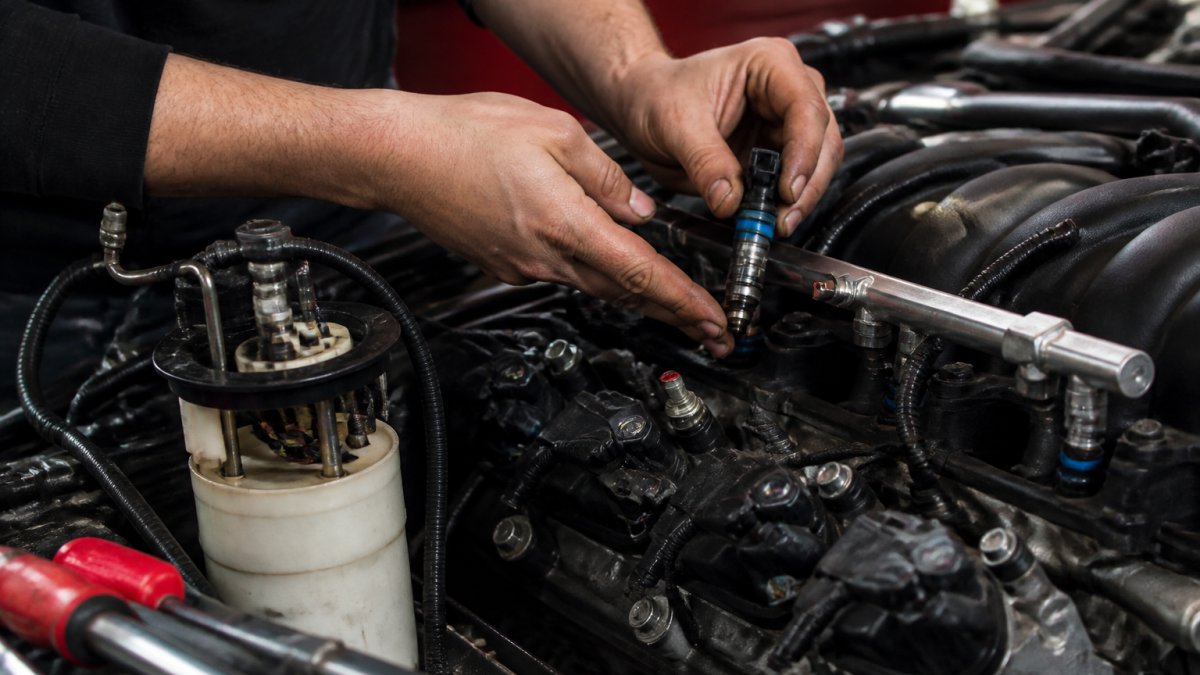
Running E85 safely starts with fuel delivery capacity, not calibration. A stock fuel system sized for gasoline often runs out of headroom well before the tune is aggressive.
Injector Capacity and Fuel Pump Sizing for Higher Ethanol Content
Injectors must flow enough to hit your target air-fuel ratio at peak engine load. The practical way to check is duty cycle: the percentage of time the injector is open during a combustion cycle.
A rough sizing method: take the injector flow rate the engine needs on gasoline at your target horsepower, multiply by about 1.3 for E85, and compare against the injector's rated flow at your actual fuel pressure.
The fuel pump faces the same math. Our FlexLink kits for the 2008-2014 Subaru WRX and the 2007-2020 WRX STi call for at least a 1000cc injector set and a 320lph or larger fuel pump to run full E85 safely.

Watch Out
Skipping the injector and pump upgrade and pushing straight to a high-ethanol tune is the most common path to a lean condition under load. Lean mixtures at high cylinder pressure damage pistons quickly, and the damage is not reversible.
Fuel Lines, Filters, and Material Compatibility
Volume is only half the hardware story. Ethanol is a solvent, and it will attack fuel-system materials that were never specified for it. Check the following before you fill up on E85:
- Fuel lines: Older rubber lines can soften or degrade. Ethanol-compatible lines are marked, and many late-model vehicles already use them.
- Seals and O-rings: Viton or equivalent ethanol-rated seals are the safe choice; generic rubber is not.
- Fuel filter: E85 can loosen deposits in a tank that has run gasoline for years, so the filter may load up faster on the first few tanks. Treat it as a wear item.
A common pattern is to upgrade the pump and injectors, then discover the stock feed line or filter is the next restriction. Log fuel pressure at the rail under load; if pressure drops as boost rises, the supply side is the bottleneck, not the injectors.
Pro Tip
Before buying parts, log injector duty cycle and rail pressure on gasoline at your current power level. That baseline tells you how much headroom you already have and how much E85 will consume.
The Ethanol Content Sensor: How Flex-Fuel Systems Read the Blend at the Pump
An ethanol content sensor measures the blend in real time so the engine control module can adjust fuel and timing continuously. Without one, the ECU assumes a fixed ethanol percentage and calibrates for a fuel that may not be in the tank.
This is the core problem with inconsistent ethanol content at the pump. Our GM/Continental E85 FlexFuel sensor is a genuine Continental unit that works with all major ECUs, and the FlexLink systems pair an industry-standard content sensor with a control module that refreshes readings every 30 milliseconds.

Pro Tip
Log ethanol content alongside your wideband data on the first few tanks. Seasonal blend shifts become obvious in the logs, and you will know exactly how much timing margin you actually have.
Ethanol Blend Tuning With Lambda: AFR Targets, Ignition Timing, and Knock Resistance
Lambda is the normalized air-fuel ratio: actual AFR divided by stoichiometric AFR for the fuel in the tank. Lambda 1.00 is stoichiometric regardless of blend, which is why tuners target lambda instead of a raw gasoline AFR number.
Under wide-open throttle, a rich target near lambda 0.85 is a common starting point for forced induction on ethanol, adjusted for your engine and boost level.
Running E85 on a Stock Tune: What Is Safe and What Is Not
A stock tune calibrated for gasoline cannot correctly fuel E85. The ECU commands gasoline fuel volume, the engine receives a blend needing far more, and the result is a lean condition under load.
What is safe depends on the platform. Our FlexLink system for the 2014-2019 C7 Corvette Stingray works with the flex-fuel mapping already present in the ECU, but still requires a tuning shop to activate the setting.

Key Takeaway
The safe-versus-unsafe line is fuel volume and calibration, not the fuel itself. If the ECU knows the blend and the system can deliver the volume, E85 is a controlled change. If either is missing, it is a lean condition waiting for load.
ECU Calibration and Flex-Fuel Tuning: A Step-by-Step Validation Workflow
Calibration is where preparation gets tested. Work through this sequence and do not skip steps to save an afternoon.
GM/Continental E85 FlexFuel sensor →
- Confirm material compatibility: ethanol-safe lines, seals, and tank components.
- Verify fuel delivery: injector duty cycle and fuel pressure at peak load.
- Install the content sensor and confirm the ECU reads blend correctly.
- Set base fueling for the measured ethanol content, targeting lambda 1.00 at cruise.
- Establish wide-open-throttle lambda targets and confirm them on a dyno or safe road log.
- Add ignition timing in small increments while logging knock.
- Test across blends: run a tank of gasoline, then a mid-blend, then E85.
- Log cold start, hot restart, and part-throttle drivability before calling it done.
| Stage | What You Check | Pass Criteria |
|---|---|---|
| Materials | Lines, seals, tank | Ethanol-compatible throughout |
| Fuel delivery | Injector duty cycle, pressure | Duty cycle under ~85% at peak load |
| Sensor | Blend reading vs. test kit | Matches within a few percent |
| Base fuel | Cruise lambda | Near 1.00 across blends |
| WOT fuel | Lambda under load | On target, no lean spike |
| Timing | Knock logs | No knock activity |
| Drivability | Cold start, part throttle | Clean start, no stumble |
For platforms without factory flex-fuel logic, a plug-and-play system can handle the blend adjustment without a custom calibration. Our ProFlex DX for the 2018-23 Mustang GT and Mach 1 installs in about an hour with no tuning required and uses BlendSense technology to adjust in real time, with documented gains of 40-45 wheel horsepower on E85.
Cold Starts, Seasonal Drivability, and Long-Term Durability on Ethanol
Cold starting is the first complaint new ethanol users report. Ethanol's higher heat of vaporization makes it harder to atomize at low temperatures, so cranking takes longer and the first few seconds can run rough.
Seasonal blend changes are the second surprise, and they are the one most owners underestimate. Winter E85 carries less ethanol for cold-weather starting, which shifts your effective octane and fueling.
Storage, Moisture, and Maintenance
Long-term, ethanol is hygroscopic, meaning it absorbs moisture from the air. That has three practical consequences:
- Storage: Vehicles that sit for weeks should avoid long storage on high-ethanol blends. If storage is unavoidable, run the tank down and fill with gasoline before parking, or use a fuel stabilizer rated for ethanol.
- Corrosion: Moisture in the tank and lines can promote corrosion in steel components. Check fuel-system materials periodically, especially on older vehicles.
- Filters and deposits: The first few tanks of E85 on a previously gasoline-only vehicle can loosen deposits and load the fuel filter. Replace it on a shorter interval at first, then return to the manufacturer's schedule.
Follow the maintenance intervals your manufacturer specifies, and treat fuel filter condition as a wear item rather than an afterthought. On direct-injection engines, also watch for injector fouling, since ethanol blends and DI together can leave deposits that affect spray pattern.
The Real Cost Trade-Off: Miles Per Gallon vs. Price Per Mile
The window-sticker miles-per-gallon figure no longer applies on E85. Because the fuel carries less energy per gallon, fuel economy typically drops by roughly 20 to 30 percent versus gasoline, depending on the blend and driving. That drop is not automatically a loss, because E85 is often priced lower per gallon than regular gasoline.
To compare, divide the price per gallon by the miles per gallon you actually observe on each fuel.
Key Takeaway
Ethanol ownership is a maintenance and measurement discipline, not just a tuning choice. Log blend, fuel economy, and cost per mile alongside your tune, and the seasonal and storage surprises become predictable instead of expensive.
Conclusion
Tuning for ethanol rewards preparation and punishes shortcuts. The blend at the pump varies, the fuel volume required is higher than gasoline, and the calibration has to know both.
That is exactly the problem Advanced Fuel Dynamics solves. Our plug-and-play flex fuel systems read the blend in real time, dynamically balance fuel delivery, and install in your garage without a custom tune.
Frequently Asked Questions
Does a vehicle need a tune to run E85?
It depends on the vehicle and the blend. Many modern ECUs already contain flex-fuel mapping, so a car like a 2014-2019 C7 Corvette Stingray can run E85 once a content sensor system is installed and the setting is activated. Older or non-flex-fuel vehicles usually need an ECU calibration to account for the higher fuel demand and different stoichiometric ratio. Running E85 on a stock tune without that support can cause lean conditions, so confirm your ECU's capability before switching fuels.
What modifications are needed to tune a car for E85?
Most builds need three things: enough fuel delivery, a way to read ethanol content, and ECU support. On a 2008-2014 Subaru WRX, for example, the platform requires at least a 1000cc injector set and a 320lph or larger fuel pump to safely run full E85, plus a flex-fuel system and HP Tuners support to enable it. Skipping the fuel system upgrade is the most common mistake and the fastest route to a lean condition under load.
How does a flex-fuel sensor adjust an engine tune?
An ethanol content sensor measures the blend in the fuel line and reports it to the ECU or a control module. The ECU then adjusts the air-fuel mixture and ignition timing for efficient operation. Systems with fast refresh rates, such as 30 milliseconds, track changes as you drive, so the calibration follows the fuel rather than assuming a fixed blend. That matters because pump E85 varies seasonally, and a tune built for one batch can be wrong for the next.
How much power can an E85 tune add?
Gains depend on the engine and whether it is naturally aspirated or forced induction. Naturally aspirated cars generally see a 7-8% wheel horsepower boost, while forced induction cars typically see 9-10%. On a dual-injection 5.0L Coyote Mustang GT, a plug-and-play flex-fuel system is rated for 40-45 wheel horsepower gains on E85 with no tuning required. Higher octane rating and knock resistance are what allow the extra timing and boost.
What is the difference between an E85 tune and a flex-fuel tune?
An E85 tune is calibrated for a fixed ethanol content, so it assumes the pump delivers roughly the same blend every time. A flex-fuel tune reads actual ethanol content and adjusts in real time, so you can run gasoline, E85, or any mix of the two without reflashing. Flex-fuel tuning is safer for daily-driven cars because pump ethanol content varies by season and station, and it removes the risk of running a dedicated E85 calibration on a lower-ethanol tank.
What are the risks of tuning a vehicle for ethanol fuel?
The main risks are lean conditions from undersized injectors or fuel pumps, corrosion in fuel system components not rated for ethanol, and cold-start or drivability issues in low temperatures. Ethanol also burns more fuel, so fuel consumption rises and range drops. A vehicle-readiness check covering materials, fuel delivery, sensors, and ECU support before tuning prevents most of these problems. Validate any calibration with a wideband oxygen sensor and data logging before pushing boost or timing.
The challenge is not understanding ethanol; it is building a fuel system that keeps up with a blend that changes every fill-up. Advanced Fuel Dynamics builds plug-and-play flex fuel systems that read ethanol content in real time, dynamically match fuel delivery, and install without a custom tune. Get started with Advanced Fuel Dynamics and make real power on ethanol with consistent, balanced delivery from the first tank.