

Does a Flex Fuel Kit Void Your Warranty?
November 04, 2026

Last Updated: November 4, 2026
Quick Summary
A flex fuel kit's own warranty covers defects in the kit itself, while your vehicle manufacturer's warranty covers the vehicle, and each follows its own rules. Confirm the kit fits your exact year, engine, and fuel system before you buy, and keep your installation records and proof of purchase.
- Read your vehicle warranty booklet and ask your dealer how aftermarket fuel system parts are treated.
- Warranties commonly exclude damage from misuse, improper installation, neglect, and unapproved modifications.
- The ProFlex DXI is built for the 2018-2025 Ford F150 with the dual injection 5.0L Coyote engine.
- Record stored codes and freeze-frame data before clearing anything, since support needs them to evaluate a claim.
- Troubleshoot fuel quality, connections, and installation details before you open a warranty claim.
Table of Contents
- How Flex Fuel Kit Warranty Coverage Works
- E85 Conversion Kit Compatibility Before You Buy
- Installation Support and Keeping Your Warranty Intact
- Step-by-Step Warranty Claim Process
- Troubleshooting Before You File a Claim
- Comparing Support Across Kit Manufacturers
- Next Steps for Protecting Your Truck's Coverage
- Frequently Asked Questions
How Flex Fuel Kit Warranty Coverage Works
Most owners worry that adding a flex fuel kit will void their factory warranty. Advanced Fuel Dynamics builds flex fuel systems, including the ProFlex DXI for the 2018-2025 F150, and this question comes up with customers often. The short answer: a kit's own warranty and your vehicle manufacturer's warranty are two separate things, and each follows its own rules.
Kit warranty versus vehicle manufacturer warranty
Your kit warranty covers defects in the kit itself. Your vehicle manufacturer's warranty covers the vehicle. These can overlap in the case of a failure, so it helps to know where each one begins and ends.
Coverage for a specific component can be affected if an aftermarket modification caused the failure. Read your vehicle warranty booklet and ask your dealer how aftermarket fuel system parts are treated before you install anything.
Warranty exclusions and what they usually mean
Warranties commonly exclude damage from misuse, improper installation, neglect, and unapproved modifications.
Keep your proof of purchase and installation records. They make any claim faster to process.
E85 Conversion Kit Compatibility Before You Buy
Confirm that a kit supports your exact year, engine, and fuel system before ordering. Fitment is the first thing that decides whether your warranty questions ever come up.
The ProFlex DXI is built for the 2018-2025 Ford F150 with the dual injection 5.0L Coyote engine. Its listing states an install time of about an hour with no tuning required. If your truck is a different model or engine, do not assume it will work.
For a stock Silverado, check that the kit's listed applications include your model year and engine. Our flex fuel kit for stock Silverado page shows the compatibility details for that truck.
If you are still deciding whether E85 suits your vehicle at all, read whether E85 is right for your flex fuel vehicle first.
Installation Support and Keeping Your Warranty Intact
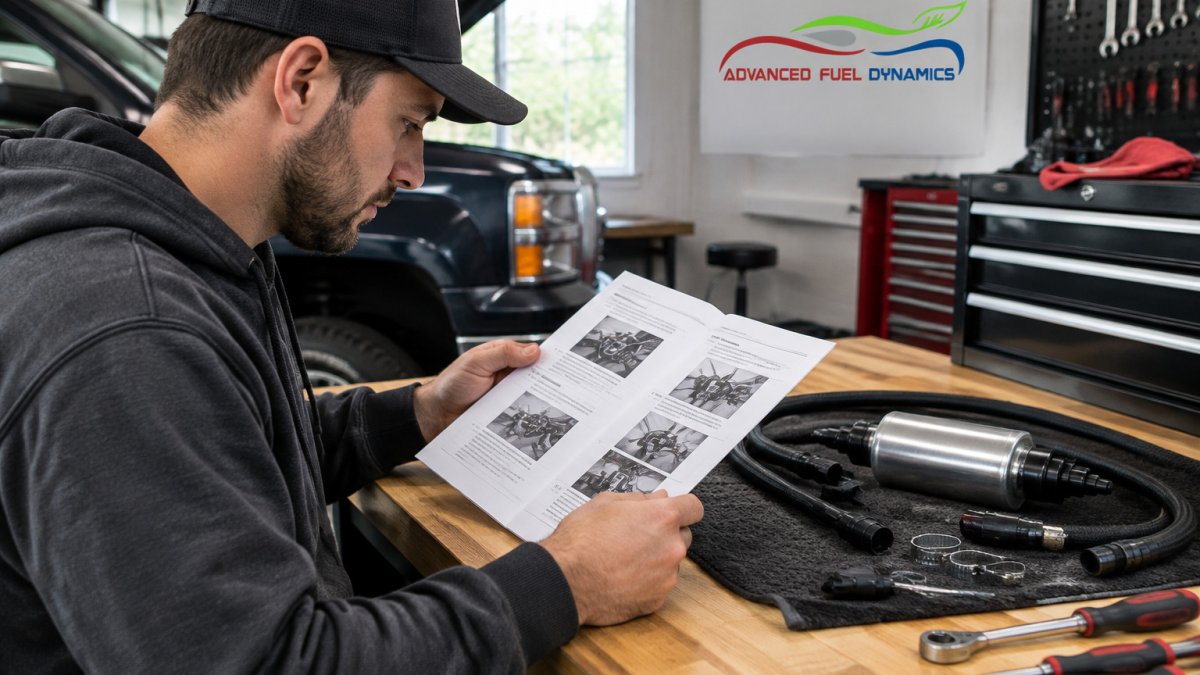
A clean installation is the best protection for both your kit and your vehicle warranty. Follow the instructions exactly, use the components supplied, and document each step.
!A truck owner in a home garage reviewing a printed installation guide beside a fuel system component on a workbench
Photograph wiring connections and keep the packaging and parts list. If an installation question comes up, contact support before you improvise a fix.
Our E-SENSE E85 Flex Fuel Content Sensor is patented and motorsport-grade, with modular fittings for OE and AN connections. The GM/Continental sensor is an alternative at a lower price point.
Step-by-Step Warranty Claim Process
If something fails, follow these steps to keep your claim moving:
- Gather your proof of purchase, installation date, and part numbers.
- Confirm the failure is not caused by installation error or fuel quality.
- Contact the kit manufacturer's support team and describe the symptoms.
- Follow any troubleshooting steps they provide.
- If a claim is approved, send the defective part as directed and keep the return tracking.
Document every conversation, including the name of the person you spoke with and the date.
Troubleshooting Before You File a Claim
Many support questions can be resolved by checking fuel quality, connections, and installation details before a warranty claim is needed. Work through these checks in order before you open a claim, each one rules out a cause that would otherwise be attributed to the hardware. Once those checks rule out fuel or installation problems, warranty implications for modifications are worth considering alongside other vehicle changes that may affect a claim.
ProFlex DXI for 2018-2025 F150 E85 Flex Fuel System →
1. Confirm what is actually in the tank. Fuel content varies by station and blend. Note the station, the date, and the indicated blend for your last two fills so support can see the pattern.
2. Read and record the codes. Use a basic OBD-II scanner and write down every stored and pending code, not just the one that triggered the light. Clear nothing until you have recorded the freeze-frame data, engine load, fuel trims, and coolant temperature at the moment the code set are what let a technician tell a sensor fault from an installation fault.
3. Inspect the wiring end to end. Check that the harness connector at the sensor is fully seated and latched, that the ground is on bare metal, and that no section of loom is resting on or near an exhaust component. Wiggle-test the connector gently while watching live sensor data, a reading that jumps when you move the harness points to a connection problem, not a failed sensor.
4. Check the fittings and the fuel path. Look for weeping, loose connections, or a fitting that was tightened onto a damaged flare. A small air leak on the suction side can produce lean readings that mimic a content-sensor error.
5. Compare behavior cold versus warm. Note whether the symptom appears at startup, at operating temperature, or only under load.
6. Review your own installation against the instructions. Re-check the steps you were least confident about, routing, torque on fittings, and the order in which connectors were seated.
Watch out: clearing codes before you record them destroys the evidence support needs to evaluate the claim, and it can make a genuine defect look like an intermittent issue that cannot be reproduced.
If the checks above do not resolve the symptom, gather your records and move to the claim process. Include the codes, the freeze-frame data, your fuel log, and clear photos of the wiring and fittings, a claim with that information gives support more to work with than a description alone.
Work through these checks in order before you open a claim, since each one rules out a cause that would otherwise be blamed on the hardware.
| Check | What to look for | Why it matters |
|---|---|---|
| Fuel content | Station, date, and indicated blend for last two fills | Shows whether fuel quality is driving the symptom |
| Codes | Every stored and pending code, plus freeze-frame data | Lets a technician separate sensor faults from install faults |
| Wiring | Connector seated and latched, ground on bare metal | Loose connections can mimic a failed sensor |
| Fittings and fuel path | Weeping, loose connections, damaged flares | A suction-side leak can cause lean readings |
| Cold vs warm | Whether the symptom appears at startup, at temperature, or under load | Narrows the likely cause before filing |
| Installation review | Routing, fitting torque, connector seating order | Catches errors in the steps you were least sure of |
Comparing Support Across Kit Manufacturers
When comparing kits, look past the price and ask about support. Check how long the warranty runs, whether registration is required, what documentation you need, and how quickly support responds.
Advanced Fuel Dynamics designs and tests its systems in-house, with dyno testing and third-party validation. Our products are patented, and our customers have driven millions of miles on our systems. Ask any manufacturer for the same level of detail on testing and warranty terms before you buy.
Next Steps for Protecting Your Truck's Coverage
Start by confirming fitment for your exact vehicle, then keep your installation records and proof of purchase together. If you run into a problem, troubleshoot first and contact support before filing a claim.
Ready to choose the right system? Browse our flex fuel kits to compare options for your truck, or contact Advanced Fuel Dynamics with your vehicle details and we will help you find the right fit.
Frequently Asked Questions
Will E85 void the warranty?
Running E85 alone does not automatically void a manufacturer warranty. A manufacturer can deny coverage for a failure it can tie to an aftermarket modification or an unapproved fuel system change. Keeping your installation documentation, following the kit's instructions, and retaining proof of purchase make it easier to show that a failure had another cause. Check your vehicle's warranty booklet and ask the dealer which modifications they consider acceptable before you install anything.
Will installing a flex fuel kit void my vehicle's warranty?
A flex fuel kit does not automatically void your entire vehicle warranty. A manufacturer may deny a claim when the kit or its installation caused the specific failure being claimed. A kit warranty covers defects in the kit itself, while the vehicle warranty covers the factory parts. Installing the kit correctly, using the included components, and documenting the work all help protect your coverage on the rest of the truck.
Do I need professional installation to keep a flex fuel kit warranty valid?
Advanced Fuel Dynamics designs its kits for plug-and-play, DIY-friendly installation. What matters is following the written instructions exactly and using the components supplied. If you install the kit yourself, keep photos and notes of the process. If a shop installs it, keep the invoice. Either way, contact the manufacturer's support team before installation if you have questions about your specific vehicle.
How do I get technical support for a flex fuel kit?
Start by reviewing the installation instructions and the product documentation, then contact the manufacturer's customer support with your vehicle year, make, model, engine, and a clear description of the issue. Have your proof of purchase and any serial or part numbers ready. Troubleshooting first can help resolve wiring, fitment, and setup questions before a formal warranty claim.
